Skip to main menu Skip to main content Skip to footer

Dry Eye Therapy


From advanced diagnostics to tailored therapies, we design a treatment plan built around your eyes and your lifestyle


What is Dry Eye?

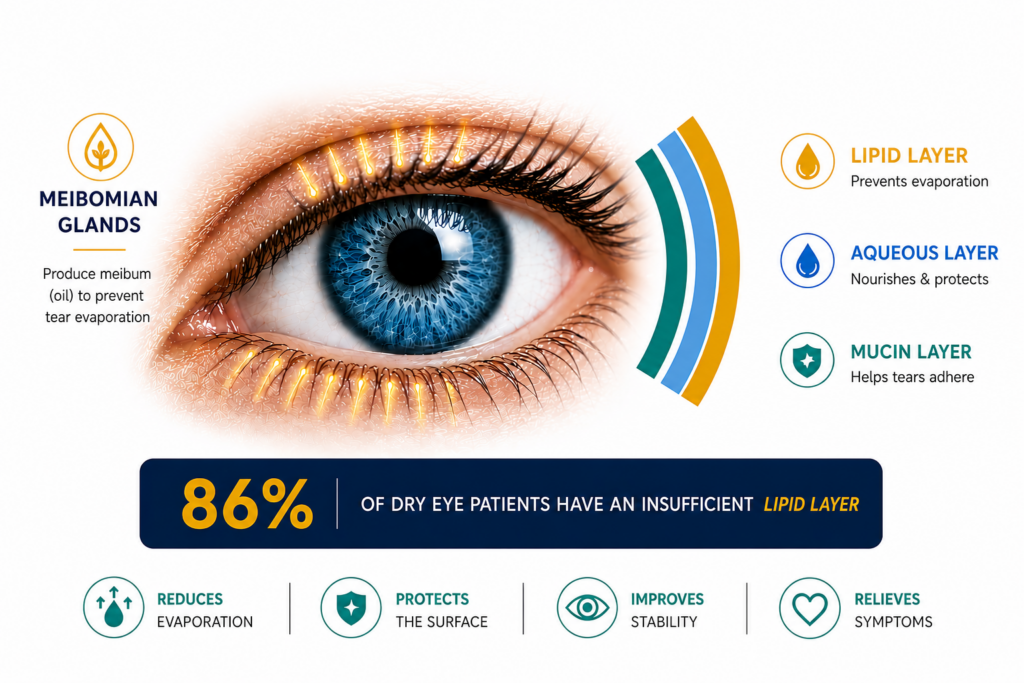
Dry Eye Disease happens when your eyes don’t make enough tears, or when the tears don’t work properly to keep your eyes moist and protected.  Dry Eye is a chronic and often progressive condition which affects approximately 25% of Canadians.  However, with the right diagnosis and treatment, symptoms can be managed, vision can be improved, and comfort restored. 

Symptoms

Many people describe feeling like there is something in their eye, which can be  uncomfortable and distracting.

A burning sensation is common, often exacerbated by environmental factors like  wind or smoke.

The eyes may appear red and irritated due to inflammation.

Paradoxically, dry eyes can lead to excessive tearing as the eyes attempt to  compensate for dryness, resulting in watery eyes that may run down the cheeks.

Individuals may experience discomfort in bright light or glare.

Vision may become blurry or change intermittently, especially after prolonged  screen time or reading.

Some people may notice mucus around the eyes, which can be bothersome.

Prolonged use of the eyes, such as reading or using a computer, can lead to fatigue and discomfort.

Many individuals with dry eyes find it uncomfortable to wear contact lenses.

Causes

As people age, tear production tends to decrease, making dry eyes more common, especially in individuals over 50

As people age, tear production tends to decrease, making dry eyes more common, especially in individuals over 50

Certain medications can reduce tear production or alter tear composition. Common  culprits include antihistamines, antidepressants, diuretics, and beta-blockers.

Exposure to dry air, wind, smoke, or prolonged screen time can increase tear  evaporation and lead to dry eyes. This is often experienced in air-conditioned or heated  environments.

Conditions like Sjögren’s syndrome, rheumatoid arthritis, and lupus can affect tear  production and lead to chronic dry eyes.

Blocked or dysfunctional meibomian glands, which produce the oily layer of tears, can  result in evaporative dry eye.

Blocked or dysfunctional meibomian glands, which produce the oily layer of tears, can  result in evaporative dry eye.

Procedures like LASIK can temporarily reduce tear production, leading to dry eye  symptoms post-surgery.

Allergic reactions can cause inflammation and irritation, leading to dry eyes.

Staring at screens for long periods can reduce blink rates, leading to increased evaporation of tears and dry eyes.

Why Choose Prism Dry Eye Clinic?

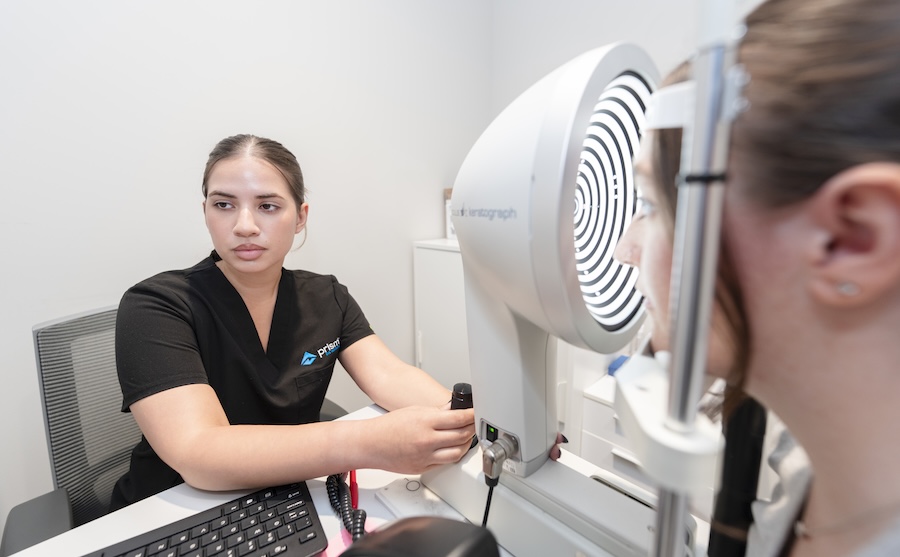
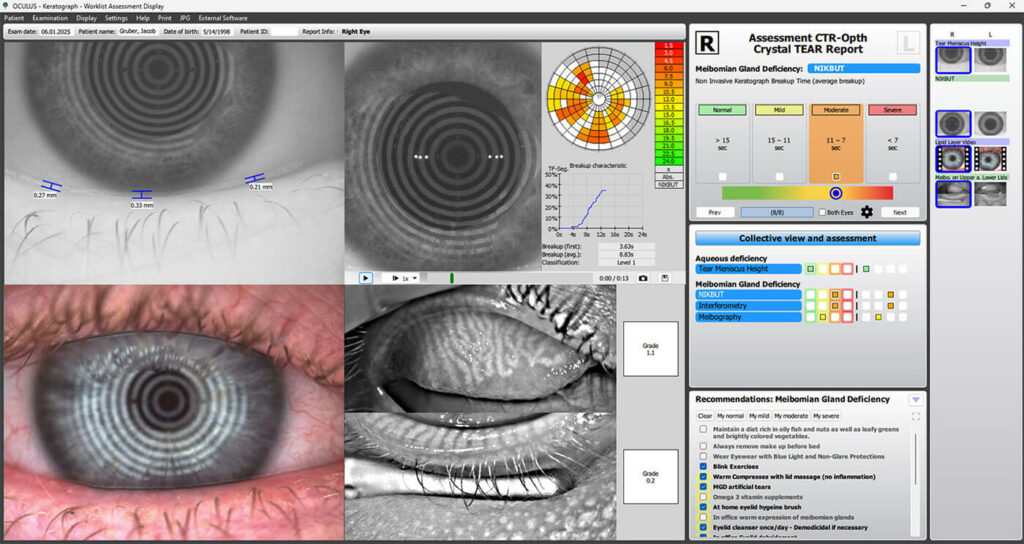
Your dry eye specialist will use the latest technology to determine the exact cause(s) of your tear and ocular surface dysfunction. We will objectively measure your symptoms, tears, ocular tissues and function of all the systems involved.  This information is used to provide you with a customized treatment plan which will be provided to you at the end of your thorough consultation.

Advanced Diagnostics

  • Tear film analysis                                                             
  • Meibography for gland imaging
  • Corneal topography
  • Ocular surface staining
  • MMP-9

Personalized Treatment Options

Intense pulsed light (IPL) is a non-invasive therapy that uses light on the skin around the eyes and face to reduce inflammation of the meibomian glands and improve tear film stability.

Transcutaneous Radiofrequency (RF) treatment for dry eye involves the use of energy waves to stimulate the production of natural oils in the meibomian glands.

LipiFlow® Thermal Pulsation is a non-surgical, FDA-approved treatment for dry eye that uses thermal pulsation to remove blockages in the meibomian glands and improve oil flow.

Low level light therapy (LLLT) uses specific wavelengths of light to stimulate cellular processes and reduce inflammation, offering relief to dry eye patients.

Microblepharoexfoliation (MBE) is a gentle, non-invasive procedure using Zocular® eyelid system treatment solution (ZEST) which removes debris and exfoliates the eyelid margin to treat blepharitis.

Amniotic membrane graft (AM) is a regenerative non-surgical therapy that uses human placental tissue to reduce inflammation and promote healing of the ocular surface in dry eye patients.

Intraductal probing is a minimally invasive procedure that uses specialized instruments to clear blockages and restore function to the meibomian glands, improving dry eye symptoms.

Blood-derived eye drops contain autologous serum or plasma, which can help promote healing and reduce inflammation on the ocular surface for dry eye patients.

Plasma Pen technology is a cosmetic device commonly used for non-surgical skin tightening, wrinkle reduction, and other aesthetic procedures.  This non-surgical device uses a plasma arc (ionized gas molecules) when applied to meibomian glands to relieve obstructions.  It can also be used to treat Conjunctival Chalasis

Proven Results

  • Thousands of patients treated successfully
  • List Stats
  • Testimonials – 3 patient stories

Dry Eye Therapy Doctors

Our Locations

Brampton

Brampton
7700 Hurontario Street, Unit 605
Brampton, Ontario  L6Y 4M3

905.456.3937
Mon. - Fri. 8:00AM – 5:00PM
Click for Optical Information

Mississauga-Oakville

Mississauga-Oakville
2201 Bristol Circle, Suite 100,
Oakville, Ontario L6H 0J8

905.456.3937
Mon. - Fri. 8:00AM – 5:00PM
Sat.
8:00AM – 4:00PM
Click for Optical Information