Skip to main menu Skip to main content Skip to footer

Dry Eye Clinic


Finally Find the Cause of Your Dry Eye.

Our comprehensive diagnostic approach can identify why your eyes are dry and create a personalized treatment plan.


Book a consultation today Physician Referral Form

What is Dry Eye disease?

Dry Eye Disease is a common, chronic, and often progressive condition that occurs when the eyes do not produce enough tears, or when the tear film does not properly moisturize and protect the surface of the eye.

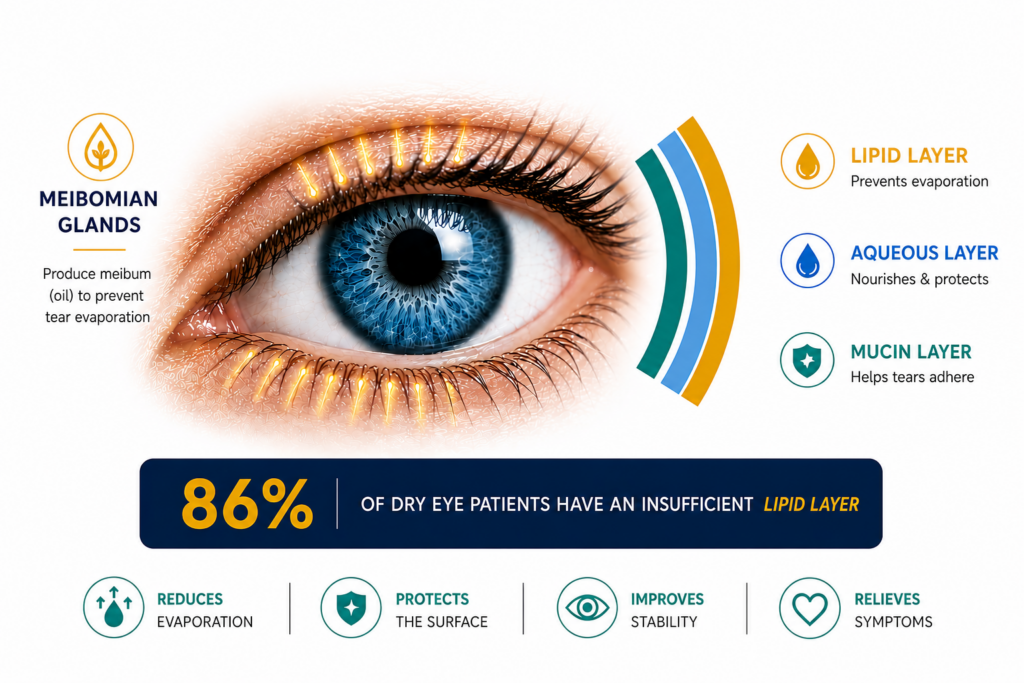
A healthy tear film is made up of three layers: the lipid layer, aqueous layer, and mucin layer. The lipid layer is produced by the meibomian glands and helps prevent tears from evaporating too quickly. The aqueous layer hydrates and nourishes the eye, while the mucin layer helps spread tears evenly across the surface.

When any of these layers are disrupted, the tear film can become unstable, leading to symptoms such as dryness, burning, watering, redness, fluctuating vision, and eye fatigue. With the right diagnosis and customized treatment plan, Dry Eye Disease can be effectively managed to improve comfort and support long-term eye health.
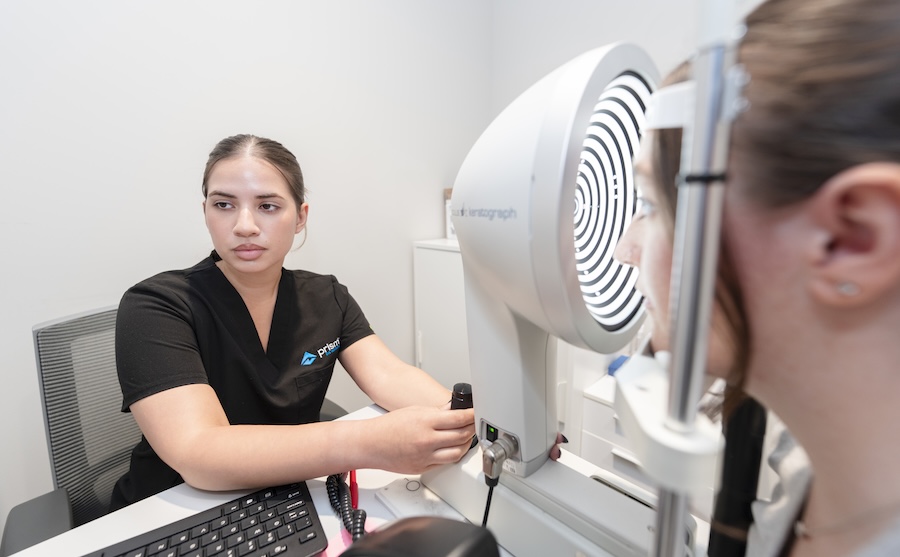
Symptoms

  • Gritty or Sandy Sensation
  • Burning or Stinging
  • Redness
  • Watery Eyes
  • Sensitivity to Light
  • Blurred or Fluctuating Vision
  • Mucus Discharge
  • Eye Fatigue
  • Difficulty Wearing Contact Lenses

Causes

  • Aging
  • Hormonal Changes
  • Medications
  • Environmental Factors
  • Autoimmune Diseases
  • Meibomian Gland Dysfunction
  • Contact Lens Use
  • Laser Eye Surgery
  • Allergies
  • Screen Time

Why Choose Prism Dry Eye Clinic?

At Prism Dry Eye Clinic, we combine advanced diagnostic technology, evidence-based treatments, and collaborative care between optometrists and ophthalmologists to provide a comprehensive approach to dry eye management. Your dry eye specialist will assess the underlying cause of your symptoms by objectively measuring your tears, ocular surface, eye tissues, and the function of the systems involved. This thorough evaluation allows us to effectively manage both routine and complex dry eye conditions and create a customized treatment plan tailored to your specific needs, which will be provided to you at the end of your consultation.
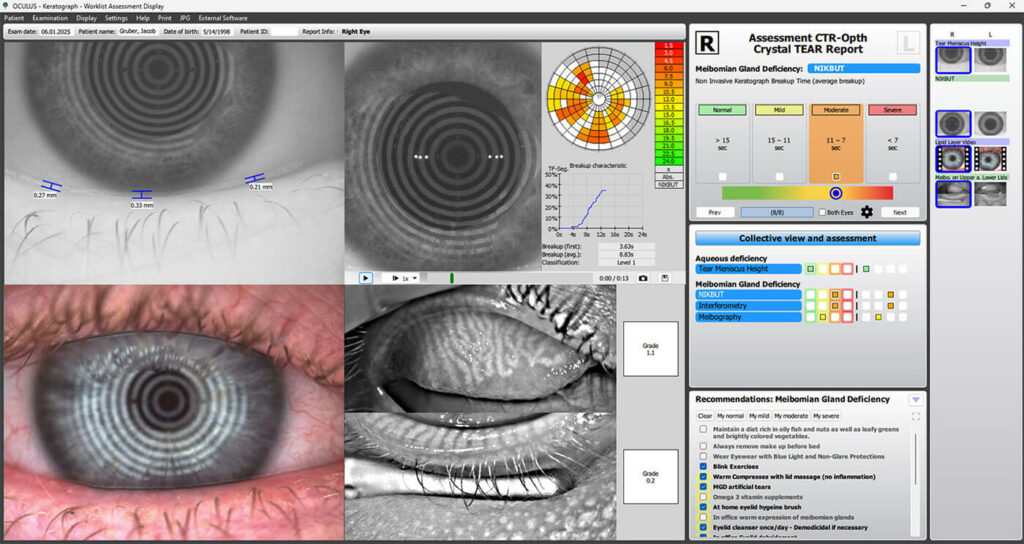
Advanced Diagnostics

  • Tear film analysis                                                             
  • Meibography for gland imaging
  • Corneal topography
  • Ocular surface staining
  • MMP-9

Please add description.

Intense pulsed light (IPL) is a non-invasive therapy that uses light on the skin around the eyes and face to reduce inflammation of the meibomian glands and improve tear film stability.

Transcutaneous Radiofrequency (RF) treatment for dry eye involves the use of energy waves to stimulate the production of natural oils in the meibomian glands.

LipiFlow® Thermal Pulsation is a non-surgical, FDA-approved treatment for dry eye that uses thermal pulsation to remove blockages in the meibomian glands and improve oil flow.

Low level light therapy (LLLT) uses specific wavelengths of light to stimulate cellular processes and reduce inflammation, offering relief to dry eye patients.

Microblepharoexfoliation (MBE) is a gentle, non-invasive procedure using Zocular® eyelid system treatment solution (ZEST) which removes debris and exfoliates the eyelid margin to treat blepharitis.

Amniotic membrane graft (AM) is a regenerative non-surgical therapy that uses human placental tissue to reduce inflammation and promote healing of the ocular surface in dry eye patients.

Intraductal probing is a minimally invasive procedure that uses specialized instruments to clear blockages and restore function to the meibomian glands, improving dry eye symptoms.

Blood-derived eye drops contain autologous serum or plasma, which can help promote healing and reduce inflammation on the ocular surface for dry eye patients.

Plasma Pen technology is a cosmetic device commonly used for non-surgical skin tightening, wrinkle reduction, and other aesthetic procedures.  This non-surgical device uses a plasma arc (ionized gas molecules) when applied to meibomian glands to relieve obstructions.  It can also be used to treat Conjunctival Chalasis

Please add description.

Proven Results

  • Prism Dry Eye Clinics help over 2,000 dry eye patients every year.
  • Patients experience an average 78% improvement in validated dry eye symptoms within 6 months.
  • The treatment protocol is based on experience with over 30,000 patients.
  •  Prism’s AI-enhanced dry eye protocols are built on 15+ years of proven treatment success.

FAQ’S

In most cases, a referral is not required. However, if you are being referred by another eye care provider or specialist, we are happy to coordinate your care.

Our dry eye specialist can certainly offer a second opinion or a treatment, however a consultation would be required in order to do so.

Coverage varies depending on the type of treatment and your insurance plan. Some diagnostic tests and treatments may not be covered. Our team will review options with you and help you understand any out-of-pocket costs. We also offer financing options which include up to 18 months of zero interest payments.

Your visit will include a detailed assessment of your symptoms, medical history, and advanced diagnostic testing and a thorough examination by your dry eye specialist. Based on the results, we will review findings with you and create a personalized treatment plan.

Yes. Dry eye can affect pre-surgical measurements used to select your intraocular lens (IOL) and can impact visual outcomes after surgery. Treating dry eye before cataract surgery helps improve accuracy and overall satisfaction.

In many cases, yes. Optimizing the surface of the eye before surgery allows for more precise measurements and helps reduce irritation and blurry vision after surgery. Your care team will assess whether pre-treatment is recommended for you.

Many glaucoma patients use long-term eye drops that can irritate the ocular surface. Over time, preservatives in these medications may contribute to dry eye symptoms.

Dry eye can affect healing, comfort, and visual outcomes after refractive surgery. Identifying and managing dry eye beforehand helps reduce post-operative symptoms and improves long-term satisfaction.

We take a proactive approach by:

  • Screening all surgical patients for dry eye
  • Treating the ocular surface before surgery when needed
  • Monitoring and managing symptoms after surgery

This integrated approach helps optimize surgical outcomes and patient comfort.

Absolutely. Even mild symptoms are important to discuss, as they can influence surgical planning, recovery, and visual results.

LET'S STAY CONNECTED

FOLLOW US ON SOCIALS TO KEEP UP WITH EVERYTHING HAPPENING AT PRISM EYE.

Dry Eye Clinic Doctors

Our Locations

Brampton

Brampton
7700 Hurontario Street, Unit 605
Brampton, Ontario  L6Y 4M3

905.456.3937
Mon. - Fri. 8:00AM – 5:00PM

Mississauga-Oakville

Mississauga-Oakville
2201 Bristol Circle, Suite 100,
Oakville, Ontario L6H 0J8

905.456.3937
Mon. - Fri. 8:00AM – 5:00PM
Sat.
8:00AM – 4:00PM