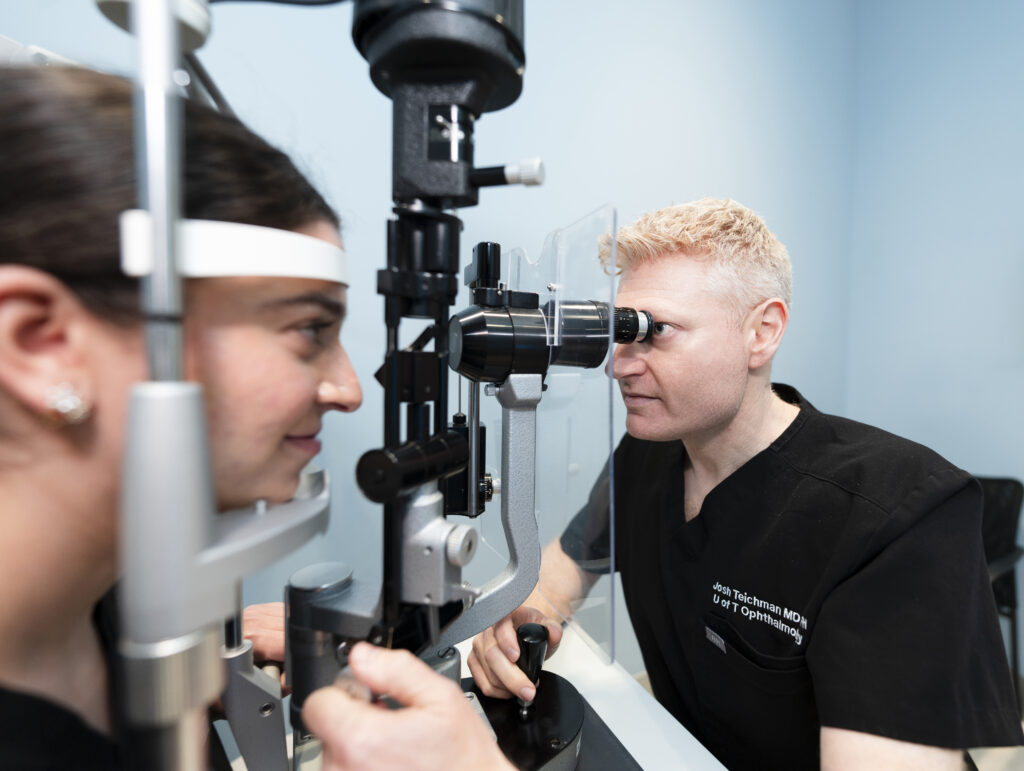

When Your Eyes Feel Dry, Irritated, or Harder to See Through
The cornea affects both comfort and clarity; and when it’s irritated or unstable, everyday tasks like reading, screen use, or wearing contact lenses can feel frustrating.
Many patients come after years of dry eye, blurry vision, or treatments that didn’t work. Our focus is long-term relief; not short-term fixes.

Common Concerns
Chronic dry eye
Keratoconus
Corneal infections or scarring
Contact lens intolerance
Blurry vision despite glasses
What to Expect
Your first cornea visit will take about 2–3 hours so we can give your eyes the attention they need.
During your visit:
Full eye exam, including pupil dilation if needed
Advanced corneal imaging and preliminary tests
Consultation with a cornea specialist to review results
Discussion of your treatment plan and, if needed, same-day procedures (e.g. minor procedure)
We explain every step and answer all questions so you feel comfortable and informed.
We tailor treatment based on your eye surface, lifestyle, and symptom severity; focusing on lasting comfort and vision stability.
When to book
Persistent dryness or irritation
Blurry vision not helped by glasses
Contact lens discomfort
Frequently Asked Questions
Some of the most common include:
Dry eye disease
Keratoconus (thinning or bulging of the cornea)
Corneal dystrophies (inherited conditions)
Infections or ulcers
Scarring from trauma or contact lens overuse
Common signs include blurred or distorted vision, eye pain, redness, excessive tearing, light sensitivity, or a feeling of something in your eye.
Specialized tests such as corneal topography, pachymetry, slit-lamp examination, and OCT imaging are used to evaluate corneal shape, thickness, and clarity.
If left untreated, yes — certain diseases like severe infections or advanced keratoconus can lead to scarring and vision loss. Early detection and treatment are key.
Treatment depends on the cause and may include lubricating drops, prescription medication, special contact lenses, cross-linking therapy, or in severe cases, a corneal transplant.
Keratoconus is not “curable,” but it can be managed effectively. Talk to your eye doctor about the options.
Only if they’re worn too long, not cleaned properly, or not fitted correctly. Always follow your eye doctor’s care instructions and replace lenses as recommended.
Practice good contact lens hygiene.
Use protective eyewear during sports or hazardous work.
Keep eyes lubricated if they’re dry.
Have regular eye exams, especially if you have allergies, wear contacts, or have family history of corneal disease.
You should book an appointment immediately if you experience pain, sudden vision changes, light sensitivity, or persistent redness, as these can indicate corneal injury or infection.
Talk to your optometrist if you do not currently have a cornea specialist, or contact us to see one of our dedicated optometrists.